
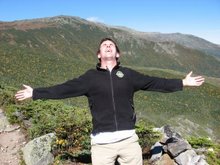
It's been a while since I've posted anything. My excuse this time is my first vacation since I arrived in Kazakhstan in August 2008. It's been a great three weeks in Portugal, Spain, and Bulgaria, but all good things come to an end. I will shortly begin the epic odyssey back to Zhezkazgan, which is comprised of a four hour bus ride, a night in Sofia, 11 hours of flights that sandwich an eight hour stop in Amsterdam, a 32 hour train ride and enough layover time in Almaty to make it journey that spans five days -- from a Sunday evening departure in central Bulgaria to a Friday morning arrival in central Kazakhstan. To me, the most absurd thing about all this is how typical it feels.
I'll do my best to write more my once I get home, but Blogspot and other blogging services have recently had "connectivity issues" in Kazakhstan. We'll see.
Sunday, February 14, 2010

Sunday, January 10, 2010
Here's To Generic Toasts
It is nearly impossible to drink even a little bit with a Russian or a Kazakh without embarking on a series of toasts. The saying of toasts is as embedded in the Russian tradition of alcohol as vodka itself. Before every shot, it is expected that somebody say a toast and this responsibility is passed around the table as the vodka (or cognac or beer or champagne...) continues to flow. Considering the omnipresence of vodka and general proliferation of toasts, one would expect to hear some interesting ones as part of a deep and rich tradition.
In the absence of any sort of drinking games, toasts plug a gap in the drinking culture, providing structure to those who desire it. Unfortunately, I have found that interesting toasts are not the norm. At weddings and other major gatherings, there are real gems representing an outpouring of the soul -- long monologues that come from the heart. On the other hand, the majority of toasts are rigidly formulaic and repeated so often that, for me at least, they have lost all meaning despite being couched in words that are friendly and kind.
In the Russian language, the "I wish you..." construction is very common in toasts and also as a ritual on holidays. On a holiday, one cannot go anywhere without being wished health, happiness, and love. I can't help but roll my eyes a little bit, even though I am aware that I am taking a bitter and surly attitude toward a harmless and well-intentioned tradition. I suppose it is most jarring because this style of toast represents to the polar opposite of the style to which I am accustomed: long, anecdotal, and on rare occasions. Quantity dilutes value and the Law of Diminishing Returns closed the book on Kazakhstani toasts long ago.
So, here's to Kazakhstan. I wish you health, love, and happiness in 2010 -- and a robust imagination when it comes to new toasts!
In the absence of any sort of drinking games, toasts plug a gap in the drinking culture, providing structure to those who desire it. Unfortunately, I have found that interesting toasts are not the norm. At weddings and other major gatherings, there are real gems representing an outpouring of the soul -- long monologues that come from the heart. On the other hand, the majority of toasts are rigidly formulaic and repeated so often that, for me at least, they have lost all meaning despite being couched in words that are friendly and kind.
In the Russian language, the "I wish you..." construction is very common in toasts and also as a ritual on holidays. On a holiday, one cannot go anywhere without being wished health, happiness, and love. I can't help but roll my eyes a little bit, even though I am aware that I am taking a bitter and surly attitude toward a harmless and well-intentioned tradition. I suppose it is most jarring because this style of toast represents to the polar opposite of the style to which I am accustomed: long, anecdotal, and on rare occasions. Quantity dilutes value and the Law of Diminishing Returns closed the book on Kazakhstani toasts long ago.
So, here's to Kazakhstan. I wish you health, love, and happiness in 2010 -- and a robust imagination when it comes to new toasts!
Saturday, November 28, 2009
A Thanksgiving Tale
Our first Thanksgiving in Zhezkazgan was not particularly noteworthy. We gathered at Robert's apartment and dined on a small chicken, mashed potatoes, and a common local salad consisting of diced potatoes, diced egg, cold peas, croutons, and mayonnaise. A decent evening, but it was a third-rate alternative to my favorite holiday.
This year we aimed a little higher, which naturally entails tracking down a turkey. A turkey is something of a mythical beast in this part of the world. Most people have heard of the bird, although not everybody. Many will say that you can find a turkey somewhere in Zhezkazgan or Satpaev, but nobody knows exactly where. Others will flatly state that turkey can't be found. In Zhezkazgan, we were teased a few times. For example, my Russian tutor told me that she saw a turkey in the weekly outdoor market; obviously, the seller hawking a turkey was never to be found again.
 (A puny turkey is better than no turkey at all and hey -- we couldn't even finish it.)
Fortunately the volunteers in Satpaev had better luck and managed to find a 3.5 kilogram (~8 lbs) turkey and even managed to buy it after it had been cleaned. From there, everything came together. We planned a Friday Thanksgiving because it fortuitously coincided with the Muslim holiday of Kurban Ait, meaning we had a three-day weekend. Nick and Corinne slaved over the turkey and the gravy and everybody else chipped in with side dishes, which were all very good although they were trumped in the end by Corinne's pumpkin pie. For a slapdash Thanksgiving in the middle of the steppe, it was surprisingly legitimate and we were all very pleased with ourselves.
 (Don't act like you're not impressed.)
 (Whether in the US or in Kazakhstan, Thanksgiving is the same. Sometimes even the best and brightest fail to make it through the day.)
 (Back when Drew was able to sit in an upright position.)
This year we aimed a little higher, which naturally entails tracking down a turkey. A turkey is something of a mythical beast in this part of the world. Most people have heard of the bird, although not everybody. Many will say that you can find a turkey somewhere in Zhezkazgan or Satpaev, but nobody knows exactly where. Others will flatly state that turkey can't be found. In Zhezkazgan, we were teased a few times. For example, my Russian tutor told me that she saw a turkey in the weekly outdoor market; obviously, the seller hawking a turkey was never to be found again.
 (A puny turkey is better than no turkey at all and hey -- we couldn't even finish it.)
Fortunately the volunteers in Satpaev had better luck and managed to find a 3.5 kilogram (~8 lbs) turkey and even managed to buy it after it had been cleaned. From there, everything came together. We planned a Friday Thanksgiving because it fortuitously coincided with the Muslim holiday of Kurban Ait, meaning we had a three-day weekend. Nick and Corinne slaved over the turkey and the gravy and everybody else chipped in with side dishes, which were all very good although they were trumped in the end by Corinne's pumpkin pie. For a slapdash Thanksgiving in the middle of the steppe, it was surprisingly legitimate and we were all very pleased with ourselves.
 (Don't act like you're not impressed.)
 (Whether in the US or in Kazakhstan, Thanksgiving is the same. Sometimes even the best and brightest fail to make it through the day.)
 (Back when Drew was able to sit in an upright position.)
Monday, November 23, 2009
The Icy Winds of Winter?
Some things in Kazakhstan never cease to amaze me. With the onset of the November chill and early winter snows, the current issue on my mind is the lack of tolerance the locals possess with regards to cold weather. I find this particularly remarkable for two reasons: first, because I would have thought that people would get used to it after a while and second, because back in the US, I had a reputation in my family for being cold all the time. When I was little, I would often be found buried under two blankets on the couch or snuggling under a veritable mountain of covers in bed. Perhaps years of training living in an old, drafty house eventually got me up to snuff. Whatever the reason, my ability to deal with wintry weather seems to be miles ahead of just about everybody here.
As my second winter in Kazakhstan begins, this point has been hammered in again almost immediately. For the last few weeks, the weather in Zhezkazgan has hovered around the freezing point with the highs rising to the mid-30s on occasion and the lows at night dropping to the low 20s. It's certainly time to break out the winter jacket (don't you fret, mom), but it's not yet necessary to call in the cavalry: long underwear, heavy duty gloves, etc. Just today, I was walking to work enjoying the freshness of a winter morning without a hat. However, I left work with a colleague and the sight of my uncovered head was so distressing that she simply couldn't bear to see me without a hat, saying that the mere sight made her colder. In Peace Corps, I need to pick my battles; this time, I acquiesced, shaking my head.
This issue runs across ethnic lines. My current theory is that both Russians and Kazakhs insulate themselves from the cold to such a great degree that it effectively ruins their ability to become somewhat comfortable with lower temperatures. I've seen Kazakh infants dressed up in jackets and hats.....in May. Locals do not skimp on heating in most buildings and trains. Drew's school is somewhat reminiscent of a blast furnace, although in fairness Zhezkazgan's school #1 could be the greatest offender that I have encountered thus far. In my host family, the heating was so strong that I kept my window open almost the entire winter. I expected to sweat my way through Peace Corps under a sultry sun on the banks of the Niger River; I did not imagine that I would be sweltering even during the brutal steppe winter!
As my second winter in Kazakhstan begins, this point has been hammered in again almost immediately. For the last few weeks, the weather in Zhezkazgan has hovered around the freezing point with the highs rising to the mid-30s on occasion and the lows at night dropping to the low 20s. It's certainly time to break out the winter jacket (don't you fret, mom), but it's not yet necessary to call in the cavalry: long underwear, heavy duty gloves, etc. Just today, I was walking to work enjoying the freshness of a winter morning without a hat. However, I left work with a colleague and the sight of my uncovered head was so distressing that she simply couldn't bear to see me without a hat, saying that the mere sight made her colder. In Peace Corps, I need to pick my battles; this time, I acquiesced, shaking my head.
This issue runs across ethnic lines. My current theory is that both Russians and Kazakhs insulate themselves from the cold to such a great degree that it effectively ruins their ability to become somewhat comfortable with lower temperatures. I've seen Kazakh infants dressed up in jackets and hats.....in May. Locals do not skimp on heating in most buildings and trains. Drew's school is somewhat reminiscent of a blast furnace, although in fairness Zhezkazgan's school #1 could be the greatest offender that I have encountered thus far. In my host family, the heating was so strong that I kept my window open almost the entire winter. I expected to sweat my way through Peace Corps under a sultry sun on the banks of the Niger River; I did not imagine that I would be sweltering even during the brutal steppe winter!
Saturday, November 14, 2009
Halloween Comes To Kazakhstan
Our weekly English clubs have a habit of acquiring a tinge of monotony as time passes. Fortunately, there are many ways to spice things up and take a break from the usual routine of typical English-y games and activities. One method is to take full advantage of American holidays and there might not be a better holiday for this sort of thing than Halloween.
The preceding English club, we told everybody that we would organize a Halloween event and we encouraged everybody to dress up for the occasion. Despite these efforts, we questioned whether the kids would actually go through with it. Drew and I really did not know what to expect. Young people in Zhezkazgan are quite familiar with Halloween, but we were unsure whether they would get into it or not.
It seems as though the prospect of dressing up scared away some of the kids, but the 20 students who did show up, it's fair to say, went nuts. The whole event started up about ten minutes late because everybody was still in the hallway perfecting the makeup for their costumes. Most of the guys went down the "horror" route and riffed off of zombies, Frankenstein, Joker, et al. The girls had a more diverse array of outfits. Regardless, almost everyone would have been above-average by American standards.
 (These guys didn't mess around.)
 (Rarely do Kazakhs get the chance to take to the high seas, but at least they can make a fair impression of a pirate!)
The preceding English club, we told everybody that we would organize a Halloween event and we encouraged everybody to dress up for the occasion. Despite these efforts, we questioned whether the kids would actually go through with it. Drew and I really did not know what to expect. Young people in Zhezkazgan are quite familiar with Halloween, but we were unsure whether they would get into it or not.
It seems as though the prospect of dressing up scared away some of the kids, but the 20 students who did show up, it's fair to say, went nuts. The whole event started up about ten minutes late because everybody was still in the hallway perfecting the makeup for their costumes. Most of the guys went down the "horror" route and riffed off of zombies, Frankenstein, Joker, et al. The girls had a more diverse array of outfits. Regardless, almost everyone would have been above-average by American standards.
 (These guys didn't mess around.)
 (Rarely do Kazakhs get the chance to take to the high seas, but at least they can make a fair impression of a pirate!)
We tried to pull out all the old Halloween classics. We brought a bucketload of toilet paper and challenged the kids to create the best old-fashioned mummy. We went for the candlelit scary story, but our group was a little too old to get sucked in. There was an attempt at trick-or-treating, but it was really just a massive candy exchange since the logistics for something more authentic would have been difficult to engineer. The evening concluded with bobbing for apples Kazakhstan-style (meaning bobbing for apples in Jamie's laundry bucket). The water was too shallow and it was a little too easy to pin the apple on the bottom, but hey -- it was better than nothing.
 (The woman gave Drew a strange look after he bought six rolls of TP would have given him an even stranger look if she knew what we planned to do with it.)
 (The mummies line up. In a moment of immense controversy, a winner was never selected.)
 (For some reason, students felt the need to give their friends a little extra push down into the water. Settle down kids -- this isn't Guantanamo Bay.)
 (The woman gave Drew a strange look after he bought six rolls of TP would have given him an even stranger look if she knew what we planned to do with it.)
 (The mummies line up. In a moment of immense controversy, a winner was never selected.)
 (For some reason, students felt the need to give their friends a little extra push down into the water. Settle down kids -- this isn't Guantanamo Bay.)
Wednesday, October 14, 2009
The Ties That Bind Us
I dedicate this post to all you black-fleece-haters out there.
Last night I met with a man from the US embassy at a restaurant for dinner. It was not a particularly formal affair; the embassy apparently sends staffers on regional trips to conduct local business and check in on volunteers and perhaps other Americans. In the case of Zhezkazgan, it is obviously just volunteers. Anyway, in the course of our conversation, he stopped mid-sentence when he noticed a small MRG logo on my fleece. Apparently, he had lived in Vermont only a few towns away several years before and frequently skiied there.
It's a small world.
Last night I met with a man from the US embassy at a restaurant for dinner. It was not a particularly formal affair; the embassy apparently sends staffers on regional trips to conduct local business and check in on volunteers and perhaps other Americans. In the case of Zhezkazgan, it is obviously just volunteers. Anyway, in the course of our conversation, he stopped mid-sentence when he noticed a small MRG logo on my fleece. Apparently, he had lived in Vermont only a few towns away several years before and frequently skiied there.
It's a small world.
Thursday, October 8, 2009
Kazakhstan: Life and Times
After English club today, Drew and I went to a Uyghur cafe for lagman and beer. Of course, the cafe was out of beer and instead the waitress directed us to the neighboring convenience store. Not a problem -- beer is cheaper that way. About 30 minutes into the meal, a friendly drunk guy came up to us, enthralled by the sound of a foreign language. We told him that we were Australians, a response that is extremely effective because it explains our English but stifles follow-up questions since nobody knows much about Australia here. Again, not a problem since there wasn't even a whiff of hostility around this guy. Not long after, we asked for the bill and waited for our change of 250 tenge. The cafe was busy tonight and apparently they were out of change, so we received a 200 tenge bill and about half a pack of gum. They didn't just give us a pack of gum for the trouble, they pro-rated the gum. The waitress brought a 3/4 full pack and gave us about two-thirds of what was left. This wasn't really a problem since 50 tenge is worth about 30 cents, which is cheaper than the price of the story, at least in my estimation. This incident wasn't even the first time I have seen volunteers receive gum in lieu of money at a cafe. So really, not a problem.
Sometimes, I remember that I am living in a strange country. The strangest thing of all is that this series of events barely seems remarkable to me any more.
Sometimes, I remember that I am living in a strange country. The strangest thing of all is that this series of events barely seems remarkable to me any more.
Subscribe to:
Posts (Atom)